


When you rotate a digital slot reel, enjoy roulette online, or pull a card in blackjack, you’re relying on a piece of software you’ll never see—the Random Number Generator. For UK players, who deal with the transparency and rigorous oversight of the Gambling Commission every day, knowing how these systems work converts a vague hunch about fairness into something you can actually check. At casino golden crown, that commitment to mechanical honesty supports every game in the lobby. We’ll guide you through exactly what an RNG does, how independent testing ensures its integrity, and why the maths behind your favourite games is a lot more complex than a simple digital dice roll.
The way Golden Crown Casino Provides a Trustworthy Gaming Environment
As you browse the Golden Crown Casino lobby, you’re looking at a game library sourced from providers whose RNG setups go through multi-jurisdictional testing. These studios—names UK players will identify from high-street bookies and online leaderboards—submit every title to independent labs before it ever goes live. The result is a catalogue where you can move from a high-volatility slot to a tactical blackjack table without ever stepping outside a zone of proven integrity. By sticking to exclusively certified content, the platform saves you the job of researching each game individually.
Device flexibility quietly opens up access. The instant-play interface functions on desktop browsers (Windows, macOS) and mobile browsers (iOS, Android) without you having a separate app for each game. That set-up ensures the RNG-certified server logic stays the same across all your gadgets. Commence on your laptop, continue on your phone during a train ride, and the mathematical integrity accompanies you—it doesn’t reset or hop to a different engine. For UK players used to smooth cross-device experiences, this consistency is just part of what you’d expect from a regulated casino.
Beyond the tech, solid customer support completes the trust triangle. If you ever challenge an outcome, the support team ought to be able to explain the RNG’s role without relying on hand-wavy reassurances. Access to game histories, the capability to pull up testing certs, and clearly worded fairness policies convert possible disputes into teachable moments. Golden Crown Casino arranges its help materials so that players who want to understand the mechanics can get plain answers, while those who just want to play can do so knowing certified systems hum away in the background.
R NGs are the silent referees of every online bet. Their integrity decides whether digital gaming earns your trust or your skepticism. We’ve walked through the whole chain—seed generation, statistical certification, regulatory enforcement, real-world player experience—and when it’s complete, you get outcomes that are indistinguishable from perfect randomness and safe from tampering. For UK players, the Gambling Commission’s oversight plus independent lab auditing creates one of the planet’s most reliable iGaming set-ups. Here’s a concrete tip: before you put a penny into any online casino, find its testing seal, check that it links to a live certificate, and make sure the operator shows its licence number clearly. At Golden Crown Casino, we keep those credentials front and centre because when technical integrity is done right, it should be the most visible thing on the page, not the least.
The Role of RTP and Casino Advantage in RNG-Based Games
Players commonly confuse the RNG and the Player Return percentage, so let’s separate them clearly. The RNG provides the randomness—it makes sure each round, card, or dice result is statistically independent and random. RTP is a different mathematical model applied over it. View the RNG as a flawless coin flipper that lands heads 50% of the time over the long term. The game rules then say that when heads wins, you get 1.9x your bet instead of even money. That 0.1 gap across all outcomes generates the house edge. The RTP shows what fraction of all wagers the game gives back to players.
Slots at a UK-facing casino like Golden Crown Casino generally present RTPs between 94% and 98%, according to the title. That number is the expected return over hundreds of millions of spins, not what you’ll see in one session. A 96% RTP slot with a certified RNG can devour half your bankroll in an hour or https://en.wikipedia.org/wiki/Sigma_Derby multiply it in minutes, and either result compromises the randomness certification or the payout maths. Fluctuation, often called volatility, controls how those returns distribute over time. High-variance games require the long run to reveal their RTP; stable ones balance things with frequent small wins.
If you’re a UK player who wants to confirm these figures yourself, you’ll usually find them via the game’s paytable or info button—and they’re progressively baked into the help screen as a required disclosure. Testing labs confirm that actual server-side RTP logs correspond to the advertised number to within a tolerance less than 0.1%. This transparency works for both players and operators: it converts the conceptual idea of fairness into a solid, auditable number you can verify before you bet a penny.
Fairness Across Game Categories: Video Slots, Table Classics, and Live Dealer
Various game types utilize RNGs in various ways, and recognizing the distinctions helps you choose wisely. Video slots rely entirely on the classic PRNG setup we earlier covered. The generator produces out a number, the game maps it to reel positions, the paytable calculates the wins. Bonus rounds, pick-and-click features, progressive jackpot triggers—all function through the same RNG pipe. What differs between slots isn’t the randomness quality—that remains rock-solid—but the maths model that controls payout timing and bonus frequency.
Virtual table games—virtual blackjack, roulette, baccarat—use RNG set-ups tuned to replicate real-world probabilities. A virtual single-zero roulette game churns out numbers with the identical 1 in 37 odds you’d get at a land-based casino in London. But the digital format removes out physical wheel bias. A real wheel can accumulate tiny wear that subtly favours certain pockets over millions of spins. The RNG version has none of those physical defects, so its outputs are mathematically more precise than the mechanical original. Same holds for virtual blackjack: the continuous shuffle kills any chance of deck tracking.
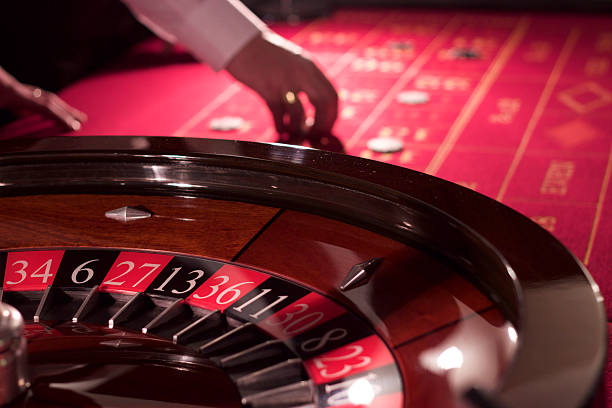
Live dealer games adopt a entirely different path, and many UK players choose them for the sheer transparency. At Golden Crown Casino, the live lobby delivers real dealers handling actual wheels, cards, and dice from purpose-built studios. Randomness moves from software to physics—gravity, friction, the human touch. Certified cameras capture every angle, and optical character recognition instantly translates card values onto your screen. An RNG isn’t powering the core result, but software still validates outcomes and computes side bets. This hybrid setup gives you a selection: mathematical perfection or that visceral trust of watching a real ball clatter into a real pocket.
How Independent Testing Labs Validate Casino RNGs
The most comforting document a UK player will never have to read? A testing lab certificate. Companies like eCOGRA, GLI (Gaming Laboratories International), iTech Labs, and Quinel are in business to analyze casino software and prove it’s clean. The process begins with a source-code review: engineers examine the actual RNG algorithm to ensure it matches what’s specified. It’s the digital version of seeing a roulette wheel being manufactured from raw steel. If a developer claims they employ a certified cryptographic RNG, the lab validates that claim byte by byte.
Then comes the statistical grunt work. Testers execute billions of simulated rounds, loading outcomes into massive datasets. They throw the Marsaglia diehard tests at them, the NIST SP 800-22 suite for cryptographic randomness, plus game-specific checks—like checking that each roulette number occurs within a statistically acceptable deviation from 1/37 over tens of millions of spins. A slot has to show its advertised Return to Player percentage falls within a razor-thin confidence interval. If a machine claims 96% RTP over its lifetime, the lab simulates that lifetime again and again to make sure the maths engine never deviates outside allowed limits.
Certification is not a single occurrence. Labs run periodic surveillance audits, extracting live game logs from active servers and re-executing tests against real-world data. At Golden Crown Casino and similar UK-facing platforms, you’ll typically spot a testing seal in the footer of the homepage—often clickable to access a current validity certificate. We’d encourage you to tap those seals now and then. A missing, expired, or unclickable certificate is a big red flag. Legit operators display them proudly because third-party verification is an expensive, ongoing commitment that distinguishes regulated sites from unlicensed ones.
Mobile Play and Fairness of RNG Between Devices
UK mobile players commonly question whether going from computer to phone changes game fairness. Short answer: no. Here is the reason. The RNG number processing happens on the casino’s main servers, not on your device. Your iPhone, Android phone, or tablet transmits a spin request—same structure as a desktop click—and the server returns the already-determined result. The game app on your phone is only a graphics engine, not a random number generator. That setup means device type, OS, and connection speed have zero effect on outcome integrity.
HTML5, which runs the vast majority of modern casino games at Golden Crown, means the same certified game file feeds both desktop and mobile screens. The RNG code exists server-side; the graphics merely adapt to fit your screen and register touch. Labs verify the RNG independently from the presentation layer, so you’re obtaining the same certified randomness whether you’re on a big desktop monitor or a small phone during your commute. That consistency is significant because UK players progressively do the majority of their gaming on mobile.
We’d advise a few helpful measures for mobile players, not about the RNG itself but to maintain a smooth session. A stable internet connection avoids mid-spin dropouts that, while they do not impact the already-fixed outcome, can conceal the result and cause needless concern. Playing via the official responsive website or a native app (where there is one) makes sure you’re connecting to the real server, not a fake version. The RNG can’t defend you against phishing sites that fake the gameplay while stealing your login details, so bookmarking the correct casino address is still standard mobile security for UK punters.
Popular Myths About Casino RNGs That Remain Online
The most stubborn myth we come across is that slots run hot and cold on a schedule. Players discuss machines turning cold after a big win or getting hot after a dry spell, as if the game had a thermostat the casino controls. A certified RNG has no memory whatsoever. The algorithm doesn’t know you just landed a jackpot, and it couldn’t care less that you’ve lost fifteen spins in a row. Every outcome is an independent event taken from the same statistical distribution. That ‘cold machine’ feeling is your brain’s pattern-recognition instinct applied incorrectly to mathematical noise.
Another popular one: the stop button on video slots. Many UK players think that timing on the spin-stop or reel-stop button can influence the outcome, changing a game of chance into one with a touch of skill. The reality: the result was determined the microsecond you hit spin. The stop button just shortens the reel animation. It doesn’t affect the pre-chosen symbol positions. Game developers include it because it gives you a nice feeling of control, but no amount of perfectly timed tapping changes what the RNG already decided.
Then there’s the nasty myth that casinos dial down their RNGs during peak hours to grab more cash, or increase them in quiet times to generate positive reviews. For licensed operators, regulatory testing makes this logistically impossible. The RNG algorithm stays locked inside certified game files that can’t be modified without a fresh submission to the testing lab. Any operator trying to push a server-side parameter change to adjust win rates would instantly flub a surveillance audit and risk its licence on the line. At Golden Crown Casino, the cost of that kind of manipulation—regulatory wipeout, criminal liability, reputational suicide—would outweigh any short-term profit. That’s exactly how the enforcement framework is intended to work.
What a Random Number Generator Actually Does
A casino Random Number Generator isn’t a specific gadget you can locate; it’s a computational algorithm that churns out a sequence of numbers or symbols with no predictable pattern. Real, honest-to-goodness randomness only exists in the physical world—radioactive isotope decay, atmospheric noise. In the digital environment, we use so-called pseudo-random number generators (PRNGs). They start from a seed value, run it through a complex mathematical formula, and spit out results that mimic true randomness to a degree that’s statistically indistinguishable. The seed typically comes from constantly shifting hardware states—CPU clock cycles, system entropy pools—ensuring that even the starting point is resistant to manipulation.
Inside a slot game, the RNG processes millions of number combos every second, even when nobody is playing. When you hit the spin button, the software takes the exact number the generator held at that nanosecond and maps it to reel positions. That mapping determines whether you hit a winning payline, kick off a bonus round, or get a near-miss. The key thing: the outcome is locked in the instant you click. The spinning reels and animations are just for show—a visual replay of a decision already made, not a physical re-creation.
Table games adjust the logic to fit the rules. In digital roulette, the RNG produces a value from 1 to37 on a European single-zero wheel. Blackjack mimics a constant shuffle of an infinite deck, dealing cards in a way that kills any card counting. At Golden Crown Casino, live dealer games skip the software RNG altogether, using real wheels and cards for physical entropy. But even there, some hybrid elements may use RNG validation for side bets. Understanding this distinction helps you appreciate the mix of mathematical precision and theatre that defines modern UK iGaming.

Banking Choices, Withdrawal Times, and the Fairness Connection
On the surface, payment processing appears to have no connection to random number generation, but they tie together through overall operational integrity. A casino that invests in top-shelf RNG certification from GLI or eCOGRA typically runs an equally tight operation on the money side. For UK players, accepted payment methods commonly involve Visa, Mastercard, PayPal, Skrill, Neteller, bank transfers, and increasingly, open banking via Trustly. PayPal’s presence is a signal: the processor runs its own checks on a merchant’s integrity before it authorizes UK gambling transactions.
Payout speeds are a fairness yardstick you feel in real time. At a well-run platform, e-wallet payouts usually land within24 hours once you’re verified. Card and bank transfer withdrawals can take3–5 business days because of banking middlemen, not the casino stalling. Golden Crown Casino’s verification process lines up with UK anti-money laundering rules, so you’ll need to submit ID docs before your first cash-out. That step can feel like a pain, but it protects both your cash and the platform’s licence. A casino that pays out fast and transparently strengthens the trust that RNG certification builds mathematically.
The big picture: RNG fairness and payment reliability are two facets of the same operational whole. Before you deposit, review a casino’s withdrawal policy page—check for promised timeframes, maximum processing limits, and any fees. Then visit player forums to see if real-life experiences match the official word. A casino that has solid RNG but delays your withdrawal for weeks counteracts everything the technical certifications aimed to establish. At Golden Crown Casino, we see fast payment as closing the fairness circle that RNG integrity initiates.
The Distinction Between True Randomness and Pseudo-Randomness
Players commonly question if a computer can ever be truly random. The truthful response needs a bit of nuance. True Random Number Generators (TRNGs) extract randomness from physical phenomena—electrical noise in a circuit, photon arrival times, even lava lamp patterns, as Cloudflare famously does. These hardware devices are entirely non-deterministic. No mathematical model can predict their next output because the source operates at a quantum level of uncertainty. In the casino industry, TRNGs rarely show up in standard digital games—they’re slower and costlier to certify—but their principles still guide how seed values are obtained.
Pseudo-Random Number Generators (PRNGs) dominate online gaming for good reason. A well-built PRNG using cryptographic standards—think the Fortuna algorithm or a properly seeded Mersenne Twister—produces number streams that pass every known randomness test. UK testing outfits like eCOGRA and iTech Labs subject those streams to diehard tests, chi-squared analyses, and run checks that detect even subtle bias. For game purposes, the practical gap between top-tier PRNGs and genuine physical randomness is zero. What matters to us as operators is that a player with access to previous outputs cannot reverse-engineer the algorithm.
The seed management process is where a lot of inferior systems break down. If a casino uses a predictable seed—just a timestamp, say—a clever attacker could synchronize their clock and forecast outcomes. UK-licensed platforms require seeds to blend multiple entropy sources: hardware interrupt timings, mouse movements on server dashboards, cryptographic nonces. At Golden Crown Casino, all integrated game providers meet these seeding standards. That offers you a system where ‘pseudo-random’ doesn’t mean second-rate. It means mathematically auditable and provably unpredictable.
How UK Standards Define RNG Standards for Online Casinos
The UK Gambling Commission sets some of the strictest technical standards in global iGaming, with RNG certification front and centre in the Remote Gambling and Software Technical Standards (RTS). Those standards demand that every game outcome originates from a properly working RNG, that the RNG passes specified statistical tests to a 99% confidence interval, and that no player action can override the RNG-determined result. This directly debunks the myth of the skill stop, transforming player protection into hard technical law.
UK regs also compel operators to maintain detailed game transaction logs for every player session—including RNG seed values and raw outcomes before they are converted to graphics. If there’s a dispute, you can submit an investigation that chases your specific game round through the whole pipeline: seed generation, algorithm processing, outcome mapping, balance update. Not many players actually use that option, but the fact it exists compels operators and software providers to maintain systems with forensic-level traceability. That’s a long way past the generic fairness promises you may encounter in less regulated places.
For Golden Crown Casino players located in the UK, these protections cover you whether you’re on desktop or mobile. The Commission also insists that testing lab reports are kept current, and any RNG tweak requires a full re-certification before the updated game can go live. So the slot version you play today is an exact, bit-for-bit match of the one that passed lab scrutiny. The UK framework isn’t based on trust—it creates a chain of verifiable evidence from the game’s mathematical core straight to your balance. Fairness is more than a slogan; it’s a technical spec.